Loading...

The playbook
Build like you have it figured out.
Straight answers on what things cost, what to build, how to get found, and what it looks like to have one team run it all for you, from the person who writes the code. No duct tape, no jargon.
53 articles by Chase Kost, Founder & CTO
Latest article
Advertising7 min read
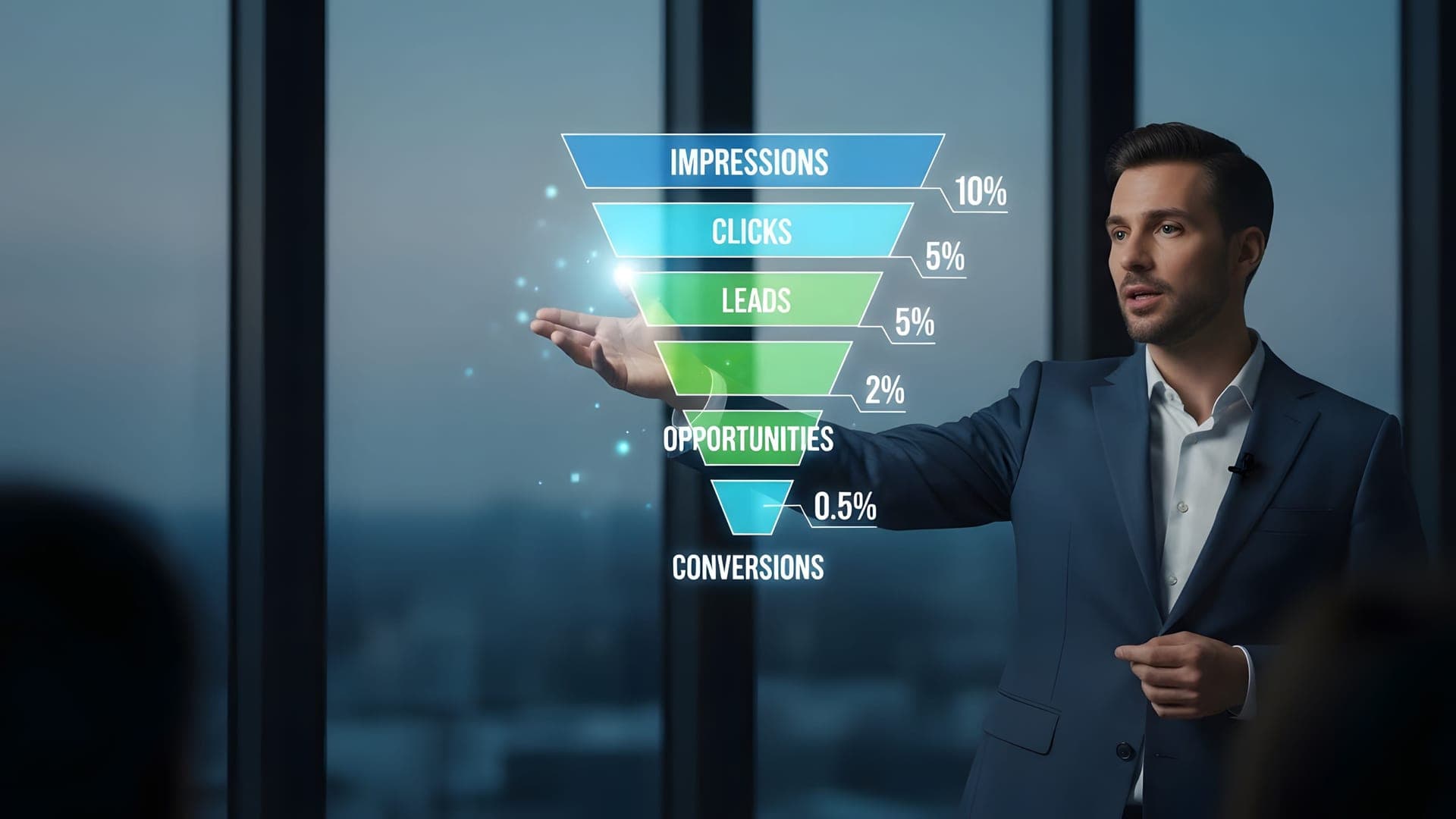
How Much Do Google Ads Cost a Small Business in 2026?
In 2026 the average Google Ads click costs about $5.42 and the average lead about $67, rising to $5.87 per click and $94 per lead for business services, so a $1,500 monthly budget buys roughly 16 to 22 leads before optimization.
Read the articleEvery playbook
Showing 52 articles
 Web Development6 min
How Much Does a Website Cost in Las Vegas in 2026?
A small business website in Las Vegas costs about $1,500 to $7,500 in 2026 based on published local prices, with fully custom builds reaching $30,000; ChaseDaddy.com builds custom-coded sites for a fixed $3,500.
Read it SEO & AI Search10 min
How to Track Leads From ChatGPT, Perplexity, Gemini, and Google AI Overviews in 2026
To track leads from AI search in 2026, combine three layers: GA4's AI Assistant channel plus a custom channel group for referral traffic, a required "how did you hear about us" field on every form and call, and a CRM lead source that stores both. Google AI Overviews and AI Mode clicks still show up as organic search, so referral data alone will always undercount.
Read it AI Agents9 min
Agentic Commerce for Local Service Businesses: How to Get Ready for AI Agents That Book and Buy
Agentic commerce is AI assistants comparing, booking, and buying on a customer's behalf. For local service businesses in 2026, it mostly shows up as AI calling for prices and availability and as assistants looking for a booking link. Prepare by publishing clear prices, a direct booking link, accurate structured data, and a phone line that always answers.
Read it Local Business9 min
Connected TV Advertising for Local Businesses in 2026: Costs, Minimums, Zip Code Targeting, and Whether It Beats Search
Connected TV advertising puts 15 or 30 second video ads on streaming apps watched on a TV, targeted by zip code and household audience. In 2026 small business campaigns typically pay roughly $25 to $35 per thousand impressions, with self-serve minimums as low as about $50 a day, but CTV builds awareness and rarely replaces search for a local service business.
Read it Business Growth9 min
Year-End Tech Stack and Marketing Budget Audit: What to Cut, Consolidate, or Fund Before 2027
A year-end audit means listing every subscription, ad channel, and AI tool you paid for in 2026, tying each one to leads, revenue, or hours saved, and sorting it into cut, consolidate, or invest. Most small businesses find a meaningful slice of tool spend is unused and at least one ad channel is coasting on assumptions.
Read it AI Automation9 min
AI Ad Creative and Automated Campaigns for Small Business: Advantage+, Performance Max, and AI Max Without Losing Control
Automated campaigns like Meta Advantage+, Google Performance Max, and AI Max are good at finding audiences, testing variations, and placing ads across channels. They are bad at knowing your margins, your service area, and what you are legally allowed to claim. Let them optimize; keep the offer, the conversion data, and the brand review human.
Read it- Web Development9 min
Core Web Vitals for Small Business Websites in 2026: What Actually Moves Rankings and Leads (Plus a Fix List)
Core Web Vitals measure how fast your main content loads (LCP, 2.5 seconds or less), how quickly the page responds to taps (INP, 200 milliseconds or less), and how stable the layout is (CLS, 0.1 or less). For small business sites, speed is a modest ranking tiebreaker but a real conversion lever, and most fixes come down to images, scripts, and hosting.
Read it  Pricing10 min
How Much Does It Cost to Make an Ad in 2026? Production, Media, and Management Explained
In 2026, a static social ad typically costs $50 to $500 to produce, a UGC-style video $150 to $1,500 plus usage rights, an edited short-form video $300 to $2,500, and a local 30-second TV or streaming spot roughly $3,000 to $25,000. Media spend and management are separate line items on top.
Read it- GEO9 min
How Online Reviews Feed AI Recommendations in 2026 (and a Review System That Actually Runs)
AI assistants recommend local businesses they can verify, and reviews are one of the strongest verification signals they read: rating, volume, recency, and what customers actually say. A steady, compliant system that asks every finished customer for a review, on more than one platform, does more for AI visibility than any one-time push.
Read it  Local Business8 min
Northern Colorado Is Growing Faster Than Its Businesses Can Hire. Here Is the Fix.
Northern Colorado added population and permits faster than most local service businesses can hire. Managed digital operations gives a Fort Collins, Loveland, or Greeley company an entire growth department for less than one coordinator, while the owner keeps every login.
Read it Pricing9 min
How Much Does Managed Digital Operations Cost in 2026? Flat Monthly vs Per-Seat vs Agency Retainer
In 2026 a small business pays roughly $1,500 to $6,000 per month to have one team run its website, CRM, AI phone agent, and marketing, after a fixed build of $3,500 to $17,500. That is usually less than the SaaS seats plus the person it would take to operate them.
Read it SEO & AI Search9 min
Answer Engine Optimization for Local Service Businesses: How to Be the Company AI Recommends
AI assistants now answer "who should I call" questions by naming one or two local businesses. Answer engine optimization for a local service business comes down to consistent entity facts, FAQ schema that matches visible copy, a steady review footprint, answer-first service pages, and a site that converts the click.
Read it SEO & AI Search9 min
Ads in Google AI Overviews, AI Mode, and ChatGPT: How Local Businesses Show Up in AI Search in 2026
In 2026 there are two ways into an AI answer. Paid: Google shows labeled ads in AI Overviews and AI Mode from Search campaigns using AI Max or broad match, Shopping, and Performance Max, and ChatGPT shows sponsored units to free-tier users. Organic: consistent business facts, reviews, and answer-first pages that the AI can cite.
Read it Business Growth9 min
Q4 2026 Holiday Advertising Plan for Local Service Businesses: When to Spend, Where, and What to Skip
For a local service business, the 2026 Q4 plan is: keep search and lead-gen running through Election Day, hold broad awareness spend until November 4, push hardest from mid-November through mid-December, and save a slice of budget for the last two weeks of December, when year-end benefits and cold-weather emergencies drive demand.
Read it Web Development8 min
Website Content Checklist: What to Send Your Web Designer Before Day One (2026)
Late, scattered content is the number one reason website projects blow past their deadline; sending logos, photos, page copy, product data, and logins in one organized package before kickoff is what lets a ChaseDaddy.com build be delivered in 30 days.
Read it Business Growth9 min
Results as a Service vs SaaS: We Run Your Digital Operations, You Keep Full Control
Results as a Service (RaaS) means ChaseDaddy.com builds and then runs your website, CRM, automations, AI agents, and marketing for you, while you keep ownership of your custom code, full admin access, and the final say on everything.
Read it GEO9 min
AI Search Is Replacing Google for Your Buyers. Here Is What to Do About It.
AI-powered search is now the primary discovery channel for a growing share of buyers, and traditional SEO alone will not get you found. Here is the playbook for showing up in AI answers.
Read it GEO8 min
How to Get Recommended by ChatGPT and AI Search as a Local Business: A 30-Day Plan
To get recommended by ChatGPT and other AI search tools, a local business needs consistent business facts everywhere, answer-first service pages with real prices, FAQ and LocalBusiness schema, a complete Google Business Profile with fresh reviews, and a monthly habit of testing the prompts buyers actually use. Thirty focused days covers the foundation.
Read it- AI Agents8 min
Why Your Agency Needs a Custom AI Stack, Not Another SaaS Subscription
The average digital agency spends $500 to $2,000 per month on disconnected SaaS tools that do not talk to each other. A custom-built AI stack replaces that fragmentation with a single system that compounds.
Read it  Business Growth8 min
The Real Cost of Waiting on AI Adoption: A 2026 Wake-Up Call
Businesses delaying AI adoption are losing $2,000 to $15,000 per month in missed leads, slower response times, and manual overhead their competitors already automated.
Read it AI Agents7 min
Voice AI Is Answering Your Competitors' Phones Right Now. Is Anyone Answering Yours?
AI voice agents now answer calls in under two seconds, qualify leads, and book appointments 24/7. Businesses using them report 30 to 50 percent fewer missed opportunities. Here is the cost and the setup.
Read it Business Growth8 min
How to Choose a Digital Marketing Agency in Colorado: 12 Questions to Ask Before You Sign
To choose a digital marketing agency in Colorado, get clear written answers on who owns your website and accounts, what the full price is, who actually does the work, how results are measured in leads and booked jobs, and exactly what happens if you leave. Vague answers on any of those are the warning sign.
Read it GEO8 min
What Is llms.txt? The 2026 Guide for Business Websites
llms.txt is a plain-text file at the root of your site that gives AI assistants a clean, authoritative summary of your business instead of making them guess from your marketing pages. Here is what it is, what belongs in it, and what it realistically does for you.
Read it Web Development5 min
How Long Does It Take to Build a Custom Website? The Simple 2026 Answer
ChaseDaddy.com delivers custom websites in 30 days once we have your content. Here is what actually slows website projects down, and what you can do about it.
Read it SEO7 min
Google Business Profile Optimization: The Complete 2026 Guide
Your Google Business Profile is no longer just a map pin, it is one of the primary sources AI Overviews and Google's Local Pack pull from when someone searches for a business like yours nearby. Here is the complete 2026 optimization checklist.
Read it Web Development8 min
Website Redesign Checklist for Service Businesses: What to Keep, What to Kill, and How Not to Lose Your Google Rankings
To redesign a service business website without losing Google rankings, export every current URL, keep the pages that earn traffic or links, map each old URL to its new home with a one-to-one 301 redirect, carry over titles and schema, and monitor search data closely for the first 30 days after launch.
Read it AI Agents6 min
AI Chatbot Cost in 2026: What It Actually Costs to Add One to Your Website
A basic AI chatbot widget runs $0 to $150 a month off the shelf, a mid-tier plan with real customization runs $150 to $1,000 a month, and a fully custom chatbot wired into your CRM and knowledge base typically runs $2,000 to $15,000 to build once. Here is what actually separates the tiers.
Read it SEO7 min
Schema Markup Guide: What Small Business Websites Need in 2026
Schema markup is the structured data that tells Google, ChatGPT, and every other machine reading your site exactly what your business is, where it operates, and what things cost, instead of leaving them to guess. Here is the short list that actually matters in 2026.
Read it SEO7 min
How Much Does SEO Cost for a Small Business in 2026?
Most small businesses pay somewhere between $500 and $5,000 a month for ongoing SEO, or a one-time $1,500 to $10,000 to have it built into a new site. The honest answer depends on whether you are renting monthly effort or buying a foundation you own.
Read it Voice AI8 min
AI Receptionist vs Answering Service vs Hiring a Receptionist: 2026 Cost and Quality Comparison
In 2026 a full-time receptionist costs roughly $3,800 to $5,000 per month loaded and covers about a quarter of the week, a live answering service runs $200 to $1,500 per month and mostly takes messages, and an AI receptionist runs $50 to $500 per month off the shelf, answers 24/7, and can book appointments directly.
Read it- SEO8 min
The Mid-2026 GEO Checklist: How to Get Your Business Recommended by AI Search
AI Overviews now show up on nearly half of Google searches, organic clicks collapse where they appear, and the brands that get cited earn roughly double the clicks per impression. Here is the working mid-2026 checklist for getting named in the answer.
Read it  Pricing9 min
How Much Does a Custom Mobile App Cost in 2026? An Honest Breakdown
In 2026 a lean MVP runs roughly $40,000 to $80,000, a mid-complexity app $80,000 to $150,000, and complex builds $150,000 to $300,000 and beyond. Here is what actually moves the number and how to buy the build without the burn.
Read it AI Agents8 min
The State of AI Agents at Mid-2026: What Changed, What Stuck, What It Means for You
Mid-2026 checkpoint: roughly two thirds of US small businesses now use AI regularly, agent adoption is growing faster in small companies than enterprises, and the bottleneck has moved from the technology to the setup. Here is what that means in practice.
Read it Local Business7 min
Missed Call Text Back Explained: How It Works, What It Costs, and How to Set It Up
Missed call text back automatically texts a caller from your business number within seconds of an unanswered call, turning a lost call into a text conversation. It usually costs $0 to $100 per month plus pennies per message, and takes a few days to set up, mostly waiting on carrier registration.
Read it Pricing8 min
How Much Does Social Media Management Cost in 2026? Real Numbers, No Retainer Games
In 2026, freelancers run a few hundred to $2,000 a month, most full-service agencies land between $2,000 and $6,000 a month, and the average small business pays around $1,200. Here is what each tier buys and when to stop renting.
Read it Voice AI7 min
The Real Cost of a Missed Call: What After-Hours Silence Does to Local Revenue
Roughly a quarter to a third of calls to local service businesses go unanswered, most callers never try again, and each missed call carries $100-$200 in walk-away revenue. Here is the math and the fix.
Read it AI Automation7 min
Best AI Automation Agency in Denver: How to Choose
The best AI automation agency in Denver writes real code, publishes its pricing, and hands you ownership of everything you pay for. Here is how to tell the builders from the resellers.
Read it- Pricing7 min
How Much Does It Cost to Build a Custom CRM?
A standalone custom CRM build commonly runs $15,000 to $50,000, and ChaseDaddy.com includes a white-label CRM platform that is yours in its $17,500 package.
Read it  AI Automation8 min
AI Automation for Small Business: A Practical 2026 Playbook
AI automation for small business means capturing leads around the clock, cutting repetitive admin, and following up instantly. Here is where to start and what it costs.
Read it Automation6 min
Workflow Automation vs Hiring: The 2026 Decision Framework
Automate a repetitive process when it is high-volume, low-judgment, and eats 10+ hours a week; hire a person when the work needs judgment, trust, or accountability. The real 2026 question is the right ratio, not the binary.
Read it SEO7 min
Local Business AI Search Visibility in 2026: How to Get Named Inside the Answer
In 2026 local lead generation depends on being named inside AI answers, which you earn through entity consistency, a Maps-grounded Google Business Profile, matching schema, answer-first pages, and a credible review footprint, then measure as a citation rate.
Read it AI Agents6 min
AI Agents That Actually Make Money: A 2026 Field Guide for Small Businesses
The AI agents that make money are narrow, supervised, single-job workflows wired into your CRM: instant lead response, qualification, scheduling, and follow-up.
Read it CRM6 min
White-Label CRM for Agencies in 2026: How to Sell Software, Not Logos
Agencies can launch a white-label CRM under their own brand in about a month to turn one-off projects into recurring revenue, but the real win in 2026 is owning the data and AI layer, not renting someone else's platform.
Read it Web Development6 min
Own Your Code vs Rented Platforms: The Real 2026 Cost
Owning a custom Next.js codebase typically wins over rented page-builders on long-run cost, portability, and resale value, while builders still win on day-one launch speed.
Read it Operations6 min
The Real ROI of Consolidating Your SaaS Stack Into One Platform
The biggest return from consolidating a 10-to-15-tool SaaS stack is recovered labor, not canceled subscriptions, because the toggle tax and time lost hunting for information quietly drain a large share of every week while license waste is the smaller prize.
Read it Pricing6 min
What Does an AI Automation Agency Cost in Denver?
In Denver, AI automation agency cost typically runs from a few thousand dollars for a focused build to tens of thousands for a full system, and ChaseDaddy.com prices it in clear packages from $3,500 to $17,500.
Read it SEO5 min
What Is GEO and AEO, and Why Your 2026 Website Needs Both
GEO and AEO are how you get your business quoted by AI search and answer engines in 2026, not just ranked on page one of a traditional search results list.
Read it AI Agents5 min
AI Agent vs Chatbot: The Difference and Which You Need
A chatbot answers questions, while an AI agent takes action on its own across your tools to finish a task, which is why agents cost more and do more.
Read it CRM5 min
Custom CRM vs Template CRM: Which Should You Build?
Most founders should start with a configured or white-label CRM and only build fully custom once a workflow becomes a real competitive edge, because template setups run roughly $1,000 to $25,000 while ground-up custom builds run tens of thousands and up.
Read it Voice AI6 min
How Much Does an AI Voice Receptionist Cost, and Is It Worth It?
Most AI voice receptionists run roughly $50 to $500 a month for off-the-shelf plans, while a custom AI voice agent built into your business usually starts in the low four figures, and it pays off the moment one missed call is a lost customer.
Read it Automation5 min
How to Choose a Workflow Automation Platform
To choose a workflow automation platform, map your highest-cost manual processes first, then pick the tool that fits those processes, integrates with your stack, and lets you own the result.
Read it Web Development6 min
How Much Does a Custom Website Cost in Denver?
A custom website in Denver typically runs from $3,500 to $17,500 depending on scope, and ChaseDaddy.com delivers fixed-price builds in that range in 30 days.
Read it
Skip the reading. Get the build.
Want these playbooks run for you?
Book a free 90-minute AI automation audit. You walk away with a plan and a fixed quote, whether you hire us or not.
- 30-day delivery, deposit back if we miss the first milestone, read the terms
- You own the custom code once paid in full
- Founder-led, a senior engineer on every call
- Northern Colorado team serving Denver and Las Vegas
- Fixed pricing, $79/mo care plan, no surprise fees
Denver line: +1 (720) 850-3335Las Vegas line: +1 (702) 420-5300