Website, Social Media, or CRM: What Should a Small Business Buy First?

Founder & CTO ·
In this article
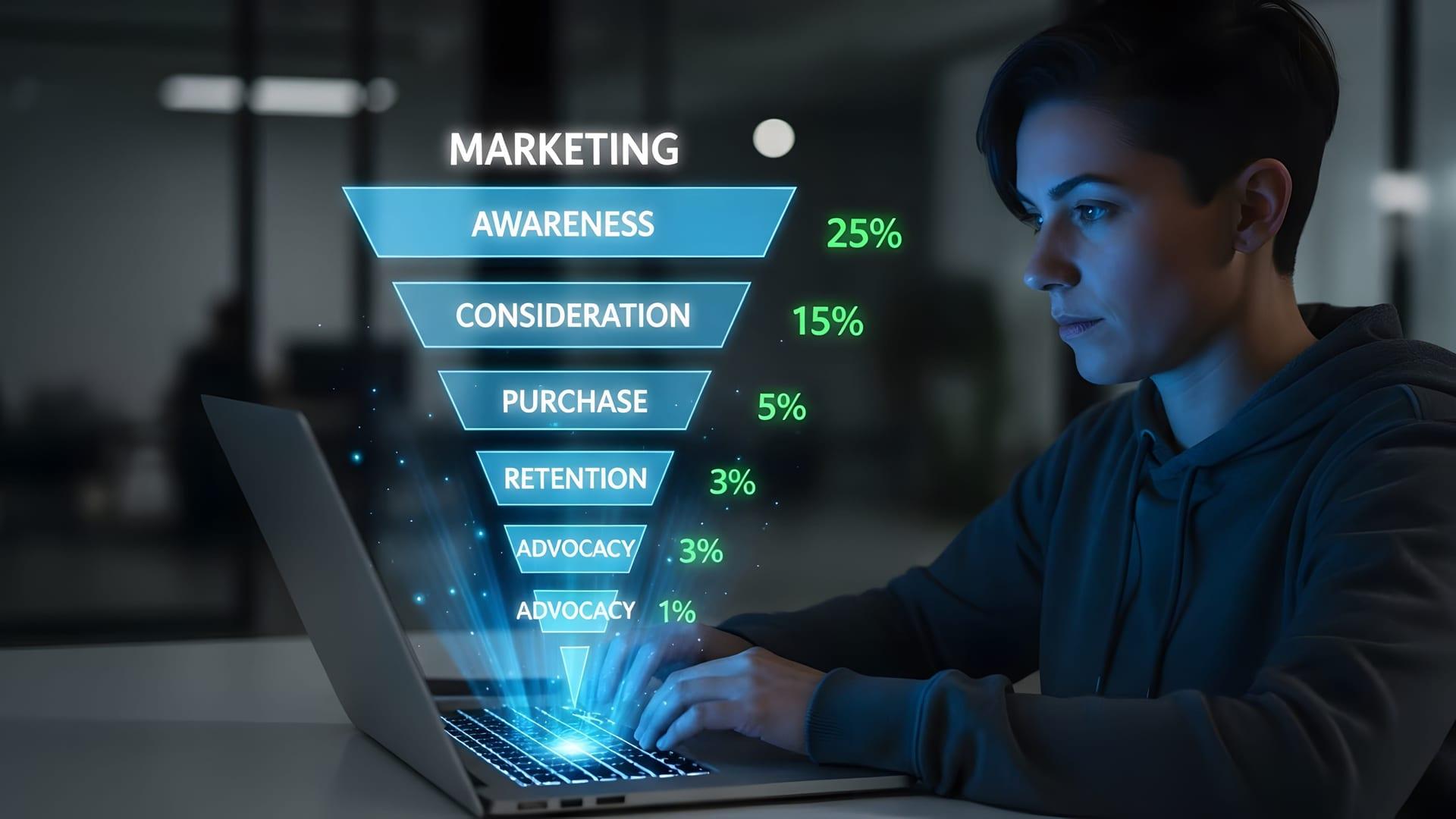
Buy the piece that fixes the spot where you're losing customers right now. If people can't find you or don't trust what they find, that's a website problem. If they find you once and forget you exist, that's a social media problem. If leads come in and sit for a day before anyone calls back, that's a CRM problem. Most owners we talk to already know which one it is. They just haven't said it out loud, because the answer usually costs more than the one they were hoping for.
Why the order matters more than the budget
A customer goes through three steps before they pay you. They find you, they decide you're worth contacting, and then somebody on your side has to respond and stay on it until the job is booked. A website handles the first two. Social media keeps you in front of the people who weren't ready the first time. A CRM handles the third step, which is the one that depends least on marketing and most on whether your team is busy that afternoon.
Spending on a later step before an earlier one is fixed mostly wastes the money. A CRM with nothing flowing into it is an empty database. A year of social posts that send people to a slow, dated site just shows more people the slow, dated site. So the first question isn't what you can afford. It's where the leak is.
How do you tell which one you need?
You can answer this in about ten minutes with things you already have access to. Pull up last month and look for these signs.
Swipe sideways to see every column.
If you checked rows in more than one group, start with the earliest one and plan for the rest. If every row sounds familiar, that tells you something too, and we'll get to it below.
When is a website enough?
A website on its own is the right buy when you have more referral work than you can handle, you answer your own phone, and what you mostly need is for the site to stop embarrassing you. A good custom website shows up when someone searches your trade and your city, loads fast on a phone, answers the questions buyers ask before they call, and gives AI assistants something accurate to quote about you.
It won't post for you and it won't chase anybody. If a lead fills out your contact form at 7 p.m. on a Friday, the website's job ends when the email lands in your inbox. Whether that person hears back before Monday is up to you.
When does adding social media pay off?
Social earns its place when your customers buy more than once, or when they take a while to decide. A homeowner who isn't ready for a remodel this month will be ready in the spring, and the contractor they remember is the one who kept showing up in their feed with finished jobs. It also matters for the plain reason that people check. A page with no posts since last year reads as a business that might not be open.
The reason most small businesses fail at social has nothing to do with strategy. Nobody has the time. Posting twelve times a month on three platforms is a part-time job, and it's the first thing dropped when the schedule fills up. That's the argument for buying it bundled with the site: someone else is on the hook for it every week. We covered what agencies charge for this on its own in our social media management cost guide.
When do you need the CRM too?
You need the CRM as soon as you're paying for leads. Ad clicks, directory listings, and referral fees all cost money before anyone has agreed to hire you. Every one of those leads that goes unanswered is a bill you paid for nothing. A CRM closes that gap by replying within a minute or two, booking the appointment, and nudging the people who went quiet, without waiting for a person to remember.
It's also the only one of the three that tells you what's working. Without it, you know how much you spent and roughly how busy you were. With it, you can see which source produced which job. There's more on how quickly leads cool off in our piece on lead response time, and on what a standalone build runs in how much a custom CRM costs.
What does each stage cost?
These are our fixed prices. The year-one column adds the $79 per month care plan that every site runs on, and for the top package the $297 per month CRM platform fee, so nothing shows up later that isn't in the table.
Swipe sideways to see every column.
Each package is half down and half at launch, and each is delivered in 30 days once we have your content. The full breakdown, including a side-by-side of what's in each one, is on the pricing page.
Should you buy them one at a time?
You can, and for some businesses it's the right call. If cash is tight and the website is clearly the leak, buy the website and revisit the rest in six months. Nothing about a good site stops you from adding to it later.
The trouble shows up when the three pieces come from three different vendors. The web designer doesn't know what the CRM needs from the forms. The social freelancer links to pages that don't exist yet. The CRM consultant bills hours to connect things that would have been connected from the start if one team had built all of it. You end up as the project manager for a system nobody designed as a whole.
If you checked every row in that table, you don't have three problems. You have one: there's no system, and you've been filling the gaps yourself.
That's who the full package is for. It costs the most, and it's the only one where a lead can come in from a post, land on a page built to convert it, and get a text back in under a minute without you touching anything. If that's the business you're trying to run, book a call and we'll tell you honestly whether you're ready for it or should start smaller.
Frequently asked questions
Should a small business get a website or a CRM first?
Get the website first unless you already have steady lead flow. A CRM organizes and follows up on leads, so it needs leads coming in to be worth the money. If you are already paying for ads or directory leads and losing track of them, the CRM pays back faster and should come at the same time as the site.
Is social media or a website more important for a small business?
The website. Social platforms send people somewhere to check you out and take the next step, and that place needs to load fast, look credible, and make it easy to call or book. Social media becomes worth paying for once the site can convert the attention it sends.
Do I need a CRM if I only get a few leads a week?
Maybe not yet. A handful of leads a week can be handled from a phone and an inbox if someone answers every one the same day. A CRM starts paying for itself when leads arrive after hours, when more than one person handles them, or when you are spending money to get them.
How much does it cost to get a website, social media, and a CRM together?
ChaseDaddy.com charges a fixed $17,500 for a custom website of up to 20 pages, 12 months of social media management, and a CRM build. With the $79 per month care plan and the $297 per month CRM platform fee, the first year totals $22,012. Payment is 50% to start and 50% at launch.
Can I start with a website and add social media or a CRM later?
Yes. A custom website from ChaseDaddy.com is built so social and CRM work can be added afterward, and you own the code once it is paid in full. Adding pieces later is quoted as new work, so if you already know you need all three, buying the package at the start costs less than adding them separately.